

A footnote to Europe’s ongoing crisis is the rising use of anti-Muslim rhetoric. Hungary’s nationalist prime minister, Viktor Orbán, defended the erecting of a razor-wire fence on its southern border through the language of cultural and religious difference. Orbán stated that “most of them are not Christians, but Muslims,” and that “Europe and European identity is rooted in Christianity. Is it not worrying in itself that European Christianity is now barely able to keep Europe Christian?” Antal Rogan, the parliament caucus leader of Orbán’s Fidesz party, said on Tuesday that “the very existence of Christian Europe” was at stake. Rogan also told the pro-government newspaper Magyar Idok “Would we like our grandchildren to grow up in a United European Caliphate? My answer to that is no”. Ivan Metik, a spokesperson for Slovakia’s interior ministry spokesman said last month: “We want to help Europe with the migration issue. We could take 800 Muslims but we don’t have any mosques in Slovakia so how can Muslims be integrated if they are not going to like it here?” In July, Slovakia’s prime minister, Robert Fico, argued that Christians would cause less tension. He added that terrorists might attempt to mingle among Muslim refugees. [...]
The post Europe’s current crisis reflects its own anxieties about Muslims appeared first on Religious Reader.
Continue ReadingWelcome to the age of post-ism. Racism is over, ageism is over, classism is over and so is sexism too, or at least this is popular thought. However, feminism is needed more now than ever and yet our feminist movement is beginning to eerily reflect the sort of attitudes we should be striving against, and at times blatantly demonstrating racist and illiberal attitudes. Feminists have in the past seemed ill at ease with the religious, who have in some cases campaigned against abortions and gay marriage – the cornerstones it could be argued of modern feminist achievement. However with more dangers against women from the state than ever before, how can Western feminism become more inclusive of minority values, and in turn the religious? First we must reflect on what feminism has always been about – was it to focus solely on the individual of the day or to empower women to be able to make decisions about themselves, for themselves? Focusing on a specific religious action with little understanding of context can cause unnecessary divides, whereas uniting on common ground such as wage disparity, maternity rights, and homelessness is plain common sense. Women: the all too often disproportional victims [...]
The post Why feminism needs to ditch colonial attitudes to claim inclusivity appeared first on Religious Reader.
Continue Reading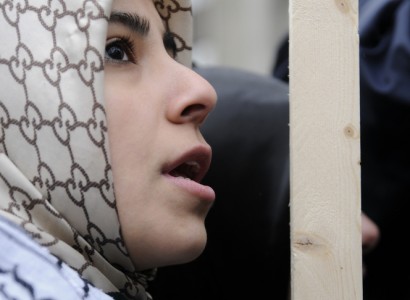
It is too often erroneously claimed that Sunni Islam is divided into a legalistic conservative mainstream presided over by jurists, and a mystical, liberal marginalised minority comprised of mystics. However such a perception came to emerge, it is inaccurate. From the beginnings of Islam in the Qur’an and in the person of the Prophet Muhammad himself, through to his companions and the jurists who established the four Sunni schools of Islamic Law, the external application of the law and the internal cultivation of the spirit have always been intertwined. Consider the ritual prayer, performed by Muslims five times a day, as this most demonstrates the interdependence of the external and the internal. In the Qur’an it is said, “Perform the Prayer to remember Me.” In this it is made clear that the Prayer is not simply a series of movements and supplications performed in accordance with an established formula. Rather, its objective is the remembrance of God. The Prophet Muhammad elaborates that, “When performing the Prayer, one is conversing intimately with one’s Lord.” However, he makes clear that, “A man gets credit only for that part of his Prayer of which he is conscious,” and it is not sufficient to [...]
The post Islam and Sufism: the false dichotomy of mystics and jurists appeared first on Religious Reader.
Continue Reading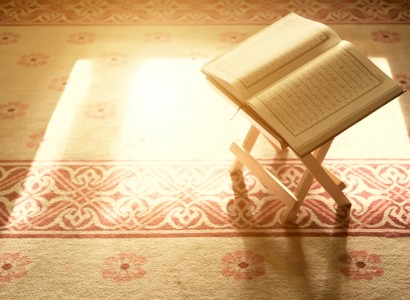
Dr. Imam Mamadou Bocoum is a holder of two Masters and a PhD from The Muslim College, and Heythrop College, University of London. He is a lecturer in Islamic Studies; a Board member of the Muslim Law Council UK and an interfaith consultant. He is currently a consultant at Faith Matters and Tell Mama. Mamadou has authored a number of written works which have included: The Position of Jews and Christians in the Qur’an; Faith and Citizenship in Islam; The status of Women in Islam; Islamic Fundamentalism and the Qur’an. He can be reached at mbocoum@yahoo.com; Mamadou@tellmamauk.org. While delivering a talk on ‘extremism in the religion of Islam’, an audience member shouted: “Bush, Blair and Bin Laden are all f——s”. I pretended that I had not heard but this was to no avail as the same individual shouted again – but this time in a louder tone – “All of them are f——s”. The heckler’s pronunciation was rather difficult to interpret (like mine!) and I thought that he meant the offensive six-letter designation. It proved a great relief when someone clarified that the ‘f word’ was fundamentalist. I then responded that besides sharing initial ‘B’ in their respective family names, [...]
The post Scholar’s corner: where does Islamic fundamentalism stem from? appeared first on Religious Reader.
Continue Reading
We thought that we would bring you a monthly round-up of cases that have been referred to IPSO, the Independent Press Standards Organisation. These are complaints made on topics including Islam, mosques, Muslim communities and events that have involved people from Muslim communities. 0048-14 Adams v Metro – Not Upheld (02/12/14) Daniel Adams complained that
The post IPSO Complaints Related to Muslims, Islam, Mosques etc appeared first on TELL MAMA.
Continue ReadingOrganisers of the ‘Mohammed Cartoons Exhibition‘ have cancelled the event citing security concerns. After talking up the event and inviting Geert Wilders and far right Liberty GB leader, Paul Weston, the event is no longer. We have also highlighted the association of the Lawyers’ Secular Society in the event through this article. Today, we have also
The post Mohammed Cartoons Cancelled appeared first on TELL MAMA.
Continue ReadingIt is almost unthinkable to speak of violence without equating it with religion. This is true in many ways as Mark Juergensmeyer notes: “Violence has always been endemic to religion. Images of destruction and death are evoked by some of religion’s most popular symbols, and religious wars have left through history a trail of blood. The savage martyrdom of Husain in Shiite Islam, the crucifixion of Jesus in Christianity, the sacrifice of Guru Tegh Bahadur in Sikhism, the bloody conquests in the Hebrew Bible, the terrible battles in the Hindu epics, and the religious war attested to in the Sinhalese Buddhist chronicles indicate that in virtually every tradition images of violence occupy as central a place as portrayals of non-violence. This raises two haunting questions: why are these images so central, and what is the relationship between symbolic violence and the real acts of religious violence that occur throughout the world today”.[1] Juergensmeyer raises some interesting questions and René Girard believes “that [his] mimetic theory offers an exhaustive explanation of the phenomenon of religious-inspired violence”.[2] In contrast, Michael Kirwan confidentially claims that Girard anticipated ‘religiously-inspired’ violence and atrocities (including 9/11).[3] Therefore, one does not need to look further to understand this [...]
The post Scholar’s corner: what can René Girard teach us about religion and violence? appeared first on Religious Reader.
Continue ReadingToday we were contacted by a young woman who recently converted to Islam and who has been through a number of issues, not of her own doing, though where she is struggling to be accepted. A few months ago, this young woman, who has transitioned and who is living her life as a woman, suffered
The post Intersectionality That Deserves Our Understanding appeared first on TELL MAMA.
Continue ReadingOver the last 3 years we have systematically showed that the on-line world and social media present significant challenges to those working on tackling anti-Muslim hatred. The challenge is not only significant, it certainly changes fast as language and actions are affected by local, national or international incidents. Yet, what is deeply concerning is when
The post Mirror Story of Female Hijabi Attacked Draws Support by Some for the Perpetrator appeared first on TELL MAMA.
Continue ReadingA recently discovered manuscript at Birmingham University could be one of the world’s oldest fragments of the Quran, thanks to scientific analysis. Tests at Oxford University’s Radiocarbon Accelerator Unit dated the parchment between AD 568 and 645 with 95.4 per cent accuracy. That timeline is a close match to the time of the Prophet Muhammad (AD 570 and 632). This accidental discovery gives new significance to the study of Islam in Birmingham. A PhD researcher, Alba Fedeli, decided to get the parchments tested. The manuscript was misbound with leaves of a similar seventh century Quran manuscript. Susan Worrall, Director of Special Collections (Cadbury Research Library), at the University of Birmingham, said: “We are thrilled that such an important historical document is here in Birmingham, the most culturally diverse city in the UK” The manuscript, which consists of two parchment leaves, contains parts of Suras 18 to 20, written in Hijazi, an early Arabic script. According to Professor David Thomas, Professor of Christianity and Islam, the findings are significant. With a ‘degree of confidence’ the parchment text is traceable to less than two decades after Muhammad’s death. “These portions must have been in a form that is very close to the [...]
The post ‘Oldest’ Quran manuscript found in Birmingham University appeared first on Religious Reader.
Continue Reading